
A sunny half-day guiding my clients Tom and Angela Conry from Utah, USA.
We picked them up from their hotel at 7:10am and entered through East Gate within minutes. It was a cold morning and our first birds were a flock of Kenya Rufous Sparrows, conveniently one of the targets for the day. A herd of Cape Buffalo and several Cattle Egrets were also hanging around the entrance. It was the couple’s first time birding in Africa, so everything was new, but we also focused on picking up some of Kenya’s near-endemics. They were equally excited to experience the park’s mammals for the first time, so we spent a significant amount of time enjoying those too.
We headed straight to East Gate Marsh. Never skip East Gate Marsh! It was full of birds, with Yellow-billed and White-faced Whistling Ducks, Malachite Kingfisher, Highland Rush Warbler, African Jacana, Black Crake, African Swamphen and plenty of egrets. We flushed a Dwarf Bittern from the reeds, which has become quite a reliable spot for this scarce species. Another fabulous highlight were two Common Reed Warblers of the African subspecies singing from the reeds. One bird briefly popped up and gave us a great but all-too-quick photographic opportunity.
Red-cheeked Cordonbleus were another favourite from this spot, showing well around the marsh.
Passing the SGR, we counted eight White Rhinos alongside three male Common Ostriches, all with brilliantly red necks. A quick stop at Vulture Pools produced another fabulous rhino encounter, with a mother and her very curious calf walking right up to our vehicle. There were countless Plains Zebra spread across the open grasslands, and I was happy to note that their numbers have seriously increased since my last few visits to the park.
Athi Dam produced many common shorebirds, and Marabou, African Openbill and Yellow-billed Storks. A pair of Water Thick-knees were around the shoreline, while the surrounding area held Yellow-throated Longclaw, Red-fronted Barbet, Brimstone Canary and Red-faced Crombec. Two Gull-billed Terns flying around the dam were a surprising find. Even more action came from a Yellow-billed Kite chasing a Black-winged Kite mid-air, whilst a flock of six Little Bee-eaters were in an absolute feeding frenzy, darting around the top of the dam after insects.
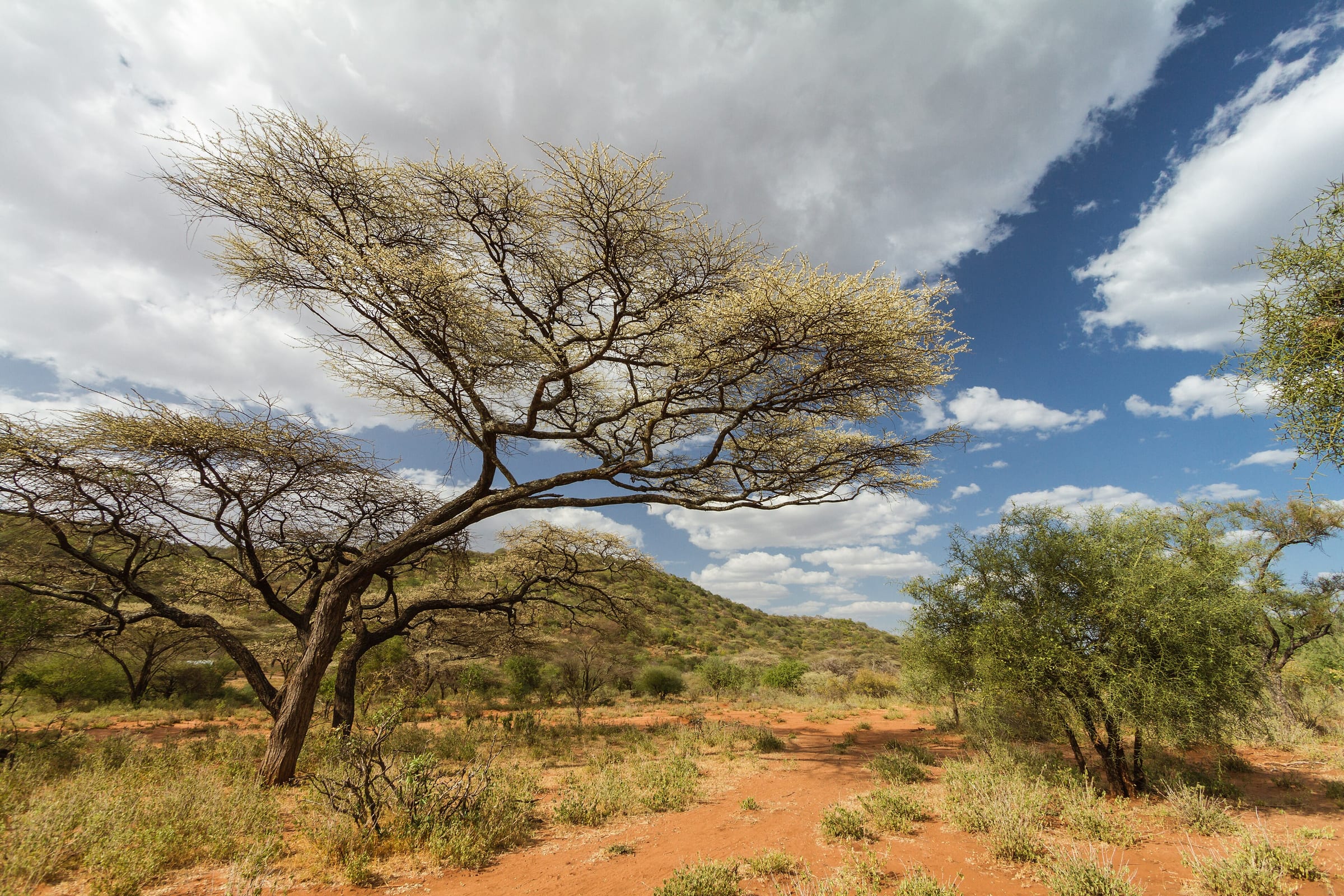
The acacia woodland proved to be the most active part of our day — and believe it or not, this was at 11am with the sun blazing overhead! Green-backed, Brown-backed and Lesser Honeyguides, three Abyssinian Scimitarbills, Nubian and Mountain Gray Woodpeckers, Red-headed, Vitelline Masked and Lesser Masked Weavers, Rüppell’s Robin-Chat, White-bellied and Red-throated Tits, Spotted Morning Thrush, Sulphur-breasted Bushshrike, African Hoopoe, Fork-tailed Drongo, Southern Black Flycatcher, Buff-bellied Warbler and Black Cuckooshrike were all packed into one huge mixed feeding flock. There was something new to pick out every few seconds, making it difficult to know where to look!
We took a break watching Giraffes feeding nearby, with Red-billed Oxpeckers working their way through the herd.
Sosian Valley was also significantly active, with hundreds of Baboons and Impala spread across the valley. Fruiting figs attracted Spot-flanked and White-headed Barbets, Blue-naped and Speckled Mousebirds, as well as Hildebrandt’s, Superb and Rüppell’s Starlings. Red-throated and White-bellied Tits were also moving through the woodland. The local lovebirds were poking their heads out through their favourite dead acacia tree. The adult Martial Eagle was sitting in its usual spot in a huge fever tree, whilst a Brown Snake-Eagle perched above the Mbagathi River was another good raptor.
We added Long-crested Eagle before moving towards the park forest, with a stop at Kingfisher Marsh. Around 40 Parasitic Weavers were hiding deep among the vegetation, with birds constantly moving between the reeds and bushes but rarely sitting in the open, making them surprisingly difficult to pick out despite their numbers. Augur Buzzard and Red-faced Cisticola were also added here.
The forest edge at Sheldrick’s Gate produced Brown Parisoma, White-headed Barbet, Holub’s Golden Weaver, Black Sawwing, African Paradise-Flycatcher, White-eyed Slaty Flycatcher and Village Weaver, before we finally connected with the endemic Kikuyu White-eye. Moving into the forest interior, we had beautiful flyover and feeding views of Hartlaub’s Turaco, a Bateleur passing overhead and two male Violet-backed Starlings moving through the canopy.
As the afternoon wore on, we quickly added Sombre Greenbul, Great Cormorant and African Darter at Nagolomon Dam, whilst a Little Egret at Hyena Dam was another highlight. With time running out, we headed for Main Gate and managed a couple of final birds before leaving the park, including Northern Fiscal and Cinnamon-chested Bee-eater.
We exited through Main Gate at 2.30pm having recorded an excellent 163 species in just half a day, along with some fantastic mammal sightings. A very productive morning in Nairobi National Park and a great introduction to African birding for Tom and Angela.